
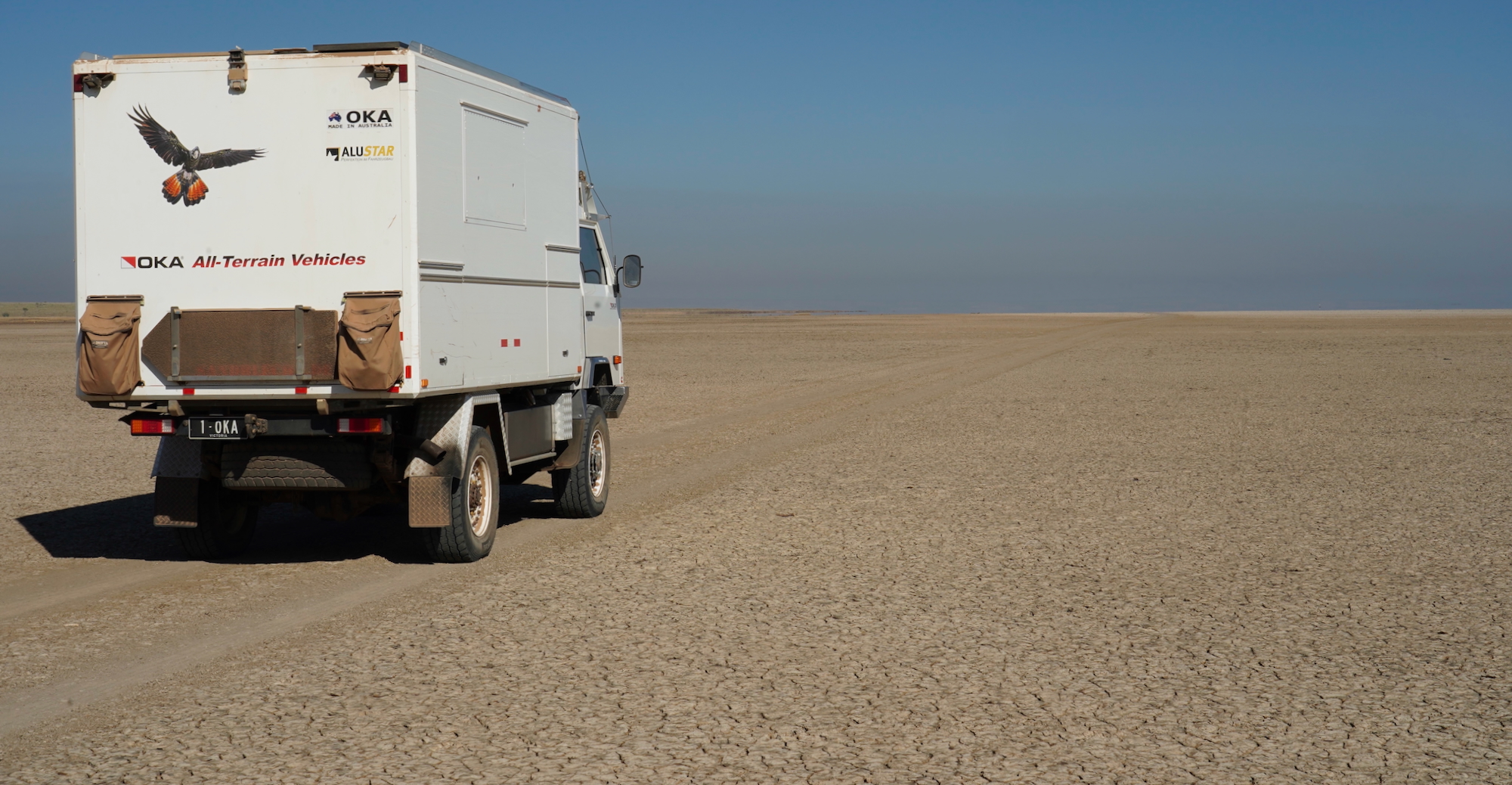
We have now been back at our homebase for a little over a couple of weeks. Getting back turned out to be a surprisingly easy & pleasant experience. Our efforts to ensure we didn’t return to an infestation of mice, spiders or worse had been 100% successful. No musty smells & not even any dusting required. Everything was exactly as we’d left it. Turned on the power & the water & it was just as though we had never left. It didn’t stop us waking on a number of mornings wondering ‘where are we today’, but staying in one spot quickly became the norm again. That said we are both looking forward to ‘moving on’ again in around 3 weeks time.
We have watched Tv for the first time in months ……… & wonder why we bothered!
Since returning we have been quite busy having arrived back with a number of things to fix or improve on our travelling setup. Most were minor issues.
However the Tvan stove had become most unreliable, almost unuseable. The replacement regulator we bought failed to bring improvement despite our crossed fingers & toes. I cleaned up sticky control mechanisms, but found a minor gas leak in the unit’s safety mechanism. When re-trying the stove after my attempts to fix it & having the gas burn back down the supply tube, creating a backfire which blew one of the control knobs right of it’s stem, (& almost gave me a heart attack!) it seemed prudent to cease my repairs & replace the entire unit with a new one. It is now on it’s way to us from the manufacturer. A drop in replacement to make the job as simple as it can be. Hopefully we will soon have a stove which ‘just works’.
Travelling with the Tvan in ‘minimalist mode’ was a good decision. We chose to leave the main awning, the zip-on ensuite & the snap on wind skirt at home, together with the variety of poles, pegs & guy ropes they require, & took just the quick erect ‘sail awning’ & the elasticated insect mesh for the many times when we camped without bothering to deploy the tent. We also had a two pole sailtrack awning on the side of the Patrol to give us different shade options as the sun moved throughout the day. This saved a lot of weight & minimised our setup & pack up times. When camped alone the we used the porta potti ‘alfresco’ & just had it inside the tent when we had neighbours (or utilised camp site toilets).
We picked up a new mattress we’d ordered on the way home. A pocket spring mattress which is more flexible, to make the bedmaking in the confined area of the Tvan much easier. The old mattress, although very comfortable (it’s now on the bed at home) was 200mm tall, the new one 160mm. 40mm may not sound much, but it makes quite a difference to the ease of climbing in & out of the ‘bedroom’. We had also assumed that the old mattress was quite heavy, & were keen to reduce weight. It was disappointing to find a difference of less than 2Kg – weight reduction had been the deciding factor to change. The rigidity of the old one had fooled us.
The air compressor, whilst continuing to work as it should since the repair early in the trip at Mildura had become an irritation. The need to use it quite frequently to change tyre pressures in sandy desert country often saw us needing to put air into the tyres early in the morning before departing for the day’s drive. This was the only time of day, when the tyres were cold, that we could make an accurate comparison to ‘usual’ pressures. We had tried to stick to the recommended 6psi ‘rule (for LT tyres) – cold pressure should rise 6psi as they heat up with driving. Problem was that we could never achieve this, pressures rose by at least 10 psi regardless of the starting cold pressure due to the high ambient temperatures. Consequently we tended to adjust them ‘on the run’ & would have pressure too low to start off in the mornings. The ‘issue’ with the compressor is that it needs the motor running on a fast idle to provide sufficient electrical current from the crank battery – this is noisy & antisocial to those who are still asleep in the campground. In addition the compressor itself adds to the racket. If the air system didn’t leak all it’s pressure from the tank overnight, there would often be sufficient air in the reservoir tank without needing to run the compressor ……………. so a leak free air system was what I wanted. Attempts at tightening hose clamps made only minimal difference, so I went to the ‘experts’ at EnZed Hoses & got the system re-jigged using plastic air pipes with push together fittings. It looks far more ‘professional’ than my leaky hoses & works. They explained that the cause of my leaks was hose that was too ‘light’, & that tightening the hose clamps would have actually caused the hoses to leak between the layers of the hose material…. hence my difficulty in locating the leaks. I could have used heavier hose, but in the crowded canopy the narrow plastic pipe is more practical as well as more aesthetically pleasing.
We carried our clothing in mesh bags with several compartments -Ikea sell them to hang in kids rooms to store toys etc, we called them ‘sausages’ – on top of the bed. Most Tvans have elasticated nets attached to the ceiling but ours didn’t. After moving the two ‘sausages’ around several times a day for almost 15 weeks we decided that paying the price for the roofnets was worth it. I have fitted them myself. Drilling holes through the fibreglass roof as part of the process was a little scary, but it all turned out just fine, as usual (for me) the thought of doing it was far worse than the reality.
Many other small things changed – lighter one piece shovel replaced the heavy screw together one & new mounts for it fitted inside the canopy, fitted higher amp circuit breaker to the circuit used to charge the batteries for the cordless drill & chainsaw. (Have since decided that the breaker I replaced was faulty, tripping at much less than it’s rated value). Fixing the leaky water hoses which we use to connect our ‘garden trigger style’ taps to the hot & cold water from the Patrol was a matter of using less rigid hose, & better quality brass click on fittings instead of the cheapie brass ebay specials. The LED striplight we use for the Tvan kitchen now has yellow tint film applied to it’s diffuser in the hope of attracting a few million less flying buzzy things when using the kitchen after dark. An inline tap in the vehicle’s coolant system, fitted when I installed the hot water service heated by the engine’s coolant, had started leaking, not a lot, but it was never going to get better, so I have replaced it with a new one . The car has been thoroughly checked over for loose fasteners after all the corrugations we ‘vibrated’ over. Amazingly I found only one nut which had loosened! Oil & filters will need doing in Tasmania. Brake fluid has been changed. As much red dust as possible has been washed out of every crevice of the vehicle, & most of the squeaks have gone with it. We have also undertaken a lightening process – discarding a number of items we had not used whilst away , including the portable fireplace (choofer) I made from a 9kg gas bottle, plus the wok we bought to use on it. Some folk love them, but we found no need for it. When fires on the ground were unacceptable we used gas. (Oh whilst I think of it – a whinge – I wish folk would be more considerate & use existing fire sites. It was quite common to find entire camp sites ‘littered’ with the remnants of fires. We simply couldn’t understand why someone would build a new fire within a metre of an existing one, but they do. Result was that in a few of the more popular spots we had no choice but to camp on top of piles of charcoal & ash).
Another whinge (I’m on a roll). Used plastic cable ties are the new ciggie butts, they are everywhere. Every …. & I mean every camp site we stayed in had one or more.
Looking back over our first extended time away with the Tvan we are both in agreement that although it was ‘roughing it’ compared to our previous motorhome experience that we are most definitely looking forward to getting away again soon & that being able to get to places off the beaten track had been very rewarding.
I have to admit that whilst we had a number of ‘Wow! moments’ the general excitement & anticipation that our previous travels around Australia afforded us has been less. In hindsight I think perhaps my expectations had been a little unrealistic. Doing ‘more of the same’ was the name of the game, & whilst I retain the sense of intrigue & curiosity about ‘new’ places, the sense of ‘adventure’ seems less, mainly I suppose, because our previous experience has taught us that what we are doing is something we know we can do with ease. Probably the most ‘adventurous’ part of the journey was driving the Walkers Crossing Track between the Birdsville Track & Innamincka. It was the most remote part of our trip & our first time on soft sandy tracks. However the second half of it saw us passing many oil & gas wells, which although mostly unmanned told us that if we got into trouble, someone would be along sooner or later, so far less remote than it had felt.
Lots of wonderful places we visited, but if having to pick just one highlight, it would be the Coongie Lakes. A beautiful place, a lake of milky white water surrounded by red sand dunes with a ‘ring of green trees & vegetation all around the waters edge, a multitude of different bird species & an adventurous drive to get there. The 42 degree all day sandstorm we endured there is something I wouldn’t mind not repeating, but it certainly added a new (to us) perspective.
What have we learned which might change how we plan a similar future trip? …….. One thing ……….. do it earlier in the year. We experienced an unseasonally hot spell in the deserts & this can & did add to the ‘harshness’ at times. It simply puts far more pressure on both us & the vehicle. Although we travelled in similar (& higher) temperatures previously the difference between an ‘indoor’ travelling style & an ‘outdoor’ travelling style is significant. Both have their pros & cons, but being far more exposed to the elements with our current set up can require resolve at times. When out in the desert there were times we romanticised returning to cool, green mountains. When back in the mountains the desert magnet once again pulled at us. This is not about failing to appreciate where we are at the time, but more about savouring our ability to move around. It is also a method of managing occasional harshness & discomfort.
It’s fair to say that we would still like to learn to slow down more. Sure we are not like the young family we met at Opalton miners camp who had driven 700kms that day & the day before & were planning to repeat the following day, but the longest we stayed in one place was just 4 days (several times), a far cry from our pre-trip belief we might stay in places we liked for weeks at a time. MrsTea is better at ‘stopping’ than I am. I hope to increase my stopping ability & to this end want to develop my interest in photography further as we travel . After talking about it for sometime, our return home has seen me buy myself a belated birthday present of a new camera. (With thanks to a small windfall courtesy of past employment in the UK’s NHS & my reaching the NHS pension age of 60). Whether the camera will see me improve my photographic output remains to be seen, but certainly it should remove the limitations my current camera imposes on me.
Ok, some stats for those who enjoy such things. 🙂
First our budget. We decided we should live & travel on a budget equivalent to the Australian governments aged pension for a couple. This is around Aus$36,000 (£18,000) per year. (EDIT: as pointed out in the comments this figure is incorrect – the max age pension for a couple is $31,000). However because we thought we could, we chose to reduce this amount & do it on Aus$32,000 (£18,600) per year. This way we would know if the world’s money markets result in our superannuation value falling away that we would still be able to continue travelling on the pension when we become eligible in 7 years time. We divided the $32,000 into 3 segments : $8,000 for Bills (Insurances, rates, vehicle registration, phone/internet, satellite phone etc), $8,000 for fuel & vehicle repairs/servicing & $16,000 for ‘daily living’ (Everything else).
$16000 pa divided by 52 is just over $300 a week.
We could live on $50,000 a year if we chose, but instead consider that if we can manage (& enjoy ourselves) on $32,000 that we will have annual ‘savings’ of $18,000 which we view as our ‘future motorhome fund’. Hopefully the rental income from our house will add to this, but as an ‘unknown’ it is something we choose not to rely on. This ‘future fund’ also provides us with what we see as an essential part of the equation – a financial safety net if we are faced with either our vehicle or our bodies requiring major work. We have met too many folk on the road who have sold up everything to travel, with nothing to fall back on who’s dream has been lost because they have had no backup to help them through a crisis. These folk often find themselves in a financial trap, unable to move on, often stuck long term in the caravan park where they broke down or got sick, exploited by the park owners & no light at the end of the tunnel. That is not a risk we are happy to take, but perhaps if it were the only choice other than not travelling we may feel differently.
The real ‘test’ whether we have been able to travel on our budget will have to wait until the end of the year, but what we can say is that having kept a notebook detailing everything we spent over the time we have been away & our first couple of weeks back at our home-base, that we have managed to come in under budget at $280 per week plus fuel.
We drove around 10,500kms with fuel consumption figures varying from 14.6 to 16.5 litres per 100kms & spent $2278 on 1720 litres of fuel +$150 for enough oil for two changes (including our next one).
We camped at 52 different places , mostly free camping, but spent a total of $234 on camping fees. The most was $24 per night, the cheapest $3 per night (incl. hot showers & a swimming pool!).
Further breakdowns of spending within the $280 a week figure over the 100 days away were: Gas refills $74 ( may reduce in future with new stove), Showers & laundry $49 , Entertainment $14 ($10 donation to RFDS & $2 each for the Blackall Artesian Pool) 🙂 Eating out/pubs $611, Repairs $285, Miscellaneous $404 which means we spent a tad under $170 (£99)a week on food+ cleaning stuff. Doesn’t sound a lot but we ate well & stuck to my gluten free/Low Fodmap diet! We did leave home well stocked.
One off items we have purchased since getting home (stove, mattress & air compressor work) have come from our ‘savings’ & so will push us to around $1500 above our annual $32,000 budget unless we keep our driving distances down between now & next July….. which may well be possible given that between now & May next year we will either be in Tasmania or at home.
In conversation with folk who have been to Tassie, in their first breath they talk of it’s beauty & natural attractions, in the second & third breath they talk of a myriad of man made attractions & events, most of which have costs attached. It remains unclear to us whether Tassie will be a money pit, or will have sufficient options for us to enjoy it at low cost. Our sense (& hope) is that we should be able to strike a reasonable balance.
We sail on 3rd December. If you are not receiving email notifications of new posts here, please saunter by for a peek sometime soon after that.
With a bit more practice, you might become better at slowing down! I am really looking forward to reading of your travels in Tasmania. Incidentally, buy a National Parks Pass (we got one on the boat – saves money). Most States have some equivalent.
One way of supplementing the coffers is to do seasonal work in tourism-related ventures, especially in parts north. This can enable you to stay for longer periods in some really lovely places – and you get to experience places the locals know and tourists never see!
Looking forward to your trip to my home state of Tassie. I am sure you will travel in different areas to where we choose to go. That said we usually head off for 2 or 3 nights reasonably close to home and I think you will look to get off the beaten track more than we do. Do you have a rough plan of where you are going
THANK YOU cuppa’s enjoyed your adventures very much, we head off about early may for 6, 7, 8, months and like you hope to hit “cruise ” mode very quickly. ( must be a Gippsland thing) looking forward to reading about your next trip.
Stay safe and happy. Warren
Love your stories, thanks for the budget breakdown It is good to know it can be done. Photography will have you slowing down, especially wildlife and night photography. Enjoy the new camera. Cheers and safe travels for Tassie, it is a beautiful place.
Wow. As always a clear and concise record of your travels and reflections on the travels.
Glad to hear you bought a good camera and I look forward to seeing nice sharp, clear, detailed photos.
On the subject of the Aged Pension. Donnis and I have been living on it for some years and would like to know where we can get a pension of $36,000 per annum. Wow if we could get that much life would so happy. As it is the pension is only $14,000. Thats becuase Donnis has a house being rented but from that we only get $8,000 nett. (Actually gross is $18,000 but after allowing for rates, repairs, insurance, agents fees, maintenance, water rates etc we lose $10,000. Rates and insurance alone accounts for $5,000) have not heard of a pension of $36,000 so you might want to check on that amount. Perhaps if Donnis sold the house and we spent the proceeds we might get a pension in excess of $20,000 according to Centrelink.
Looking forward to Tassie.
You are correct Frank in that the max annual age pension for a couple is indeed less than $36k, I just checked. 🙁 It is a tad over $31k. Apologies for the mistake. Of course that amount is reduced by the assets & income assessment. As it is, our view is that if we have the means of paying our own way we will, but if this means we are worse off than on the pension we would need to consider divesting ourselves of, the assets or income which was resulting in us being worse off. Of course this becomes a political issue which by it’s nature will attract a variety of differing views. At a current max of $31k per couple we think our ‘adopted’ budget’ is ‘close enough’ to mimic it. If an income of $31k were comprised of part pension & part other income it would still be $31k. 🙂 I may be taking a simplistic & naieve view, but would expect to receive the full age pension if the wheels fell of & we had no other means of supporting ourselves (including selling of property assets). Whether the system is fair is a whole other box & dice!
Loved your whole trip and and your ability to put it into a great read you will find tassie great and there are many good free camps and we did not find it expensive
Thanks Annette & Ruth.
Annette – Revealing our budget was for just the reason you have highlighted, to let others know it is quite do-able & without ‘struggling to survive’.
The new camera is a Sony A6500, plus a few different lenses. Ruth have sent you an email with a few more details.
As we move closer to our departure this was a very interesting read. We are thinking our budget will be very similar to yours. Happy to see it’s doable.
We had a short (2weeks) stay in Tassie a few years ago and found the freecamps there wonderful and plenty. We stuck to the natural beauty and found it very cheap.
I am
Really looking forward to spending time with my camera once we hit the road. Which camera did you end up with?
Wow, living the life Ian!! Good for you. Loved reading this. An amazing experience, seemingly well planned and organised. Love that you’re doing it under budget too. Keen to see the pics from Tasmania!! What camera did you go for??